Diamond Embroidery Review: A Bold Accent for Business Merch
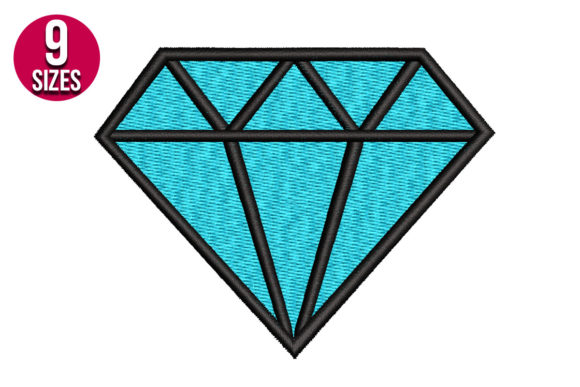
As an embroidery designer who has spent years digitizing and stitching logos for everyone from local bakeries to high-end boutiques, I approach every new machine embroidery design with a critical eye. It is not just about whether a pattern looks pretty on a screen; it is about how that digital embroidery file translates into a tangible asset that builds brand identity. Recently, I evaluated the "Diamond" design from the Shapes category, specifically looking at its potential for small business merchandise and branded patch use. Based on the description promising a "modern and solemn" look that adds a "bold accent," my initial impression was one of cautious optimism. This is not a playful or rustic motif; it feels premium, geometric, and serious.
Visual Personality and First Impressions
The moment you load the Diamond design into your software, the geometry stands out. The description highlights its "exquisite" nature, and in a business context, this translates to professionalism. Unlike floral motifs that might suit a whimsical children's brand, this design screams stability and value. For a creative studio, a florist, or a boutique wanting to elevate their handmade product presentation, this shape offers a sophisticated edge. It feels less like a decoration and more like a seal of quality. When I visualize this on a dark uniform or a structured cap, the "solemn" quality mentioned in the product details suggests it will hold its own without looking cluttered. It is a design that commands attention through simplicity and precision rather than ornate detail.
Real-World Applications for Small Business Merch
The true test of any embroidery file is its versatility across different substrates. I imagined several scenarios where the Diamond design could serve as a cornerstone for small business merch.
- Branded Patches: This is arguably the strongest use case. A diamond-shaped or diamond-motif embroided patch can be sewn onto canvas tote bags, denim jackets, or apron bibs. Because the design is described as bold, it would work exceptionally well as a chest logo accent on staff uniforms, providing instant recognition without overwhelming the garment.
- Cap Embroidery: Front-panel embroidery on structured caps requires designs that are not too wide or overly detailed. The geometric nature of Diamond suggests it could sit perfectly on a cap front, offering a modern alternative to traditional script logos.
- Apron and Uniform Detailing: For cafes and bakeries, an apron is a walking billboard. Placing this design on the upper chest or the pocket of an apron adds a touch of elegance that elevates the perceived value of the service being provided.
- Tote Bag Design: Canvas totes are staples for market vendors and Etsy sellers. A single, high-contrast Diamond stitch in the corner or center of a tote bag creates a minimalist aesthetic that appeals to modern consumers.
Technical Considerations and Potential Pitfalls
While the aesthetic appeal is high, a professional review must address the technical realities of production. The description notes that the design adds a "bold accent," which often implies higher stitch density or solid fill areas. This requires careful attention when selecting materials.
If you are planning to use this on textured fabrics like heavy linen or coarse canvas, you must ensure the spacing between elements is sufficient to prevent the stitches from merging into a muddy blob. Similarly, if this design is scaled down for a tiny product label or a sleeve detail, the "exquisite" details might get lost. I strongly advise testing the design at your intended minimum size before committing to a full production run.
Furthermore, curved surfaces present a challenge. If applying this to a unstructured cap or a soft pouch, the geometry of a diamond can distort if the fabric shifts during stitching. Using the correct stabilizer is non-negotiable here. For stretchy fabrics, a cut-away stabilizer is likely necessary to maintain the sharp lines of the diamond shape over time, especially for items that will undergo frequent washing like staff shirts.
Color Strategy and Contrast
The impact of the Diamond design relies heavily on thread colors. Since the design is meant to be "modern," sticking to a monochromatic scheme or high-contrast pairing (such as white thread on navy fabric) will yield the best results. Avoid using too many gradient colors unless the specific embroidery file supports them without causing excessive thread breaks. For a "solemn" look, metallic threads could be an interesting experiment for holiday merchandise, but standard rayon or polyester threads will offer better durability for everyday wear.
Impact on Brand Identity and Customer Trust
In the world of commercial embroidery, consistency is key to building trust. A crisp, well-executed Diamond logo on a customer's gift bag or a staff member's shirt signals that the business cares about details. It moves the needle from "homemade" to "professional grade." When customers see a clean, bold emblem, they subconsciously associate that precision with the quality of the products or services offered. Whether it is a pet brand adding a tag to a collar or a florist branding their delivery bags, this design acts as a visual anchor. It helps create a cohesive visual language across all design assets, from the website to the physical finished product.
Practical Designer Notes for Production
Before you integrate Diamond into your client projects or your own inventory, follow these practical steps to ensure success:
- Test in Black and White First: Strip away the color in your simulation software to check the structural integrity of the stitches. If it doesn't look good in one color, it won't look good in ten.
- Verify Hoop Size: The product description does not specify the exact dimensions. Check the file properties to confirm the hoop size required. Ensure it fits within the constraints of your machine and the garment area you intend to decorate.
- Create a Printable Mockup: Before stitching a single thread, generate a printable mockup to show your client or to visualize on your packaging. This saves time and material costs.
- Check Commercial Licensing: Always confirm the license terms included with the download. Ensure you have the rights to use the design for custom apparel and resale items.
- Fabric Testing: Stitch a sample on the actual fabric you plan to use. Pay close attention to how the "bold accent" interacts with the fabric texture.
In conclusion, the Diamond design holds significant promise for businesses looking to project a modern, premium image. It is a versatile asset that, when handled with technical care regarding stabilizer choice and sizing, can become a defining element of your brand's physical presence. Just remember to validate the technical specs provided in the file itself, as the description offers style cues but leaves the precise production metrics for you to verify. With the right execution, this design can truly take your fancy designs to the next level.