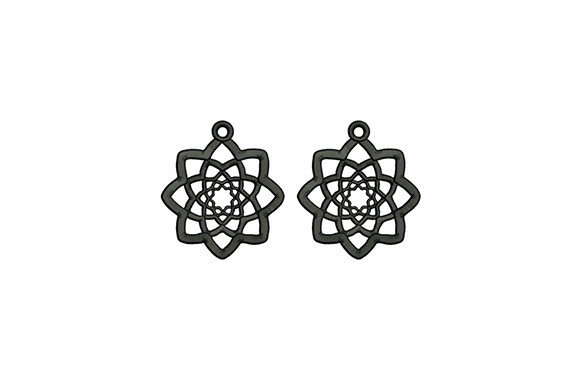
Grey Star Earrings Design Review for Business Merch
As an embroidery designer who has spent years digitizing and stitching logos for boutique brands, I approach every new machine embroidery design with a critical eye. It is not just about whether it looks pretty on a screen; it is about how it performs on a curved cap, how it holds up after fifty washes on a staff apron, and whether it elevates a brand's identity. Today, I am reviewing the Grey Star Earrings Design, a piece that initially caught my attention for its elegant blackwork style. While the title suggests jewelry, the application potential for small business merch and branded patches is surprisingly versatile if handled with the right technical knowledge.
First Impressions: Elegance Meets Modern Simplicity
Upon loading the digital embroidery file into my editing software, the first thing that strikes me is the clean lines typical of blackwork. The description promises an "elegant" aesthetic, and visually, it delivers. It feels modern yet classic, avoiding the clutter that often plagues small-scale embroidery. For a handmade brand or a creative studio, this design exudes a sense of refined simplicity. It does not scream for attention; rather, it whispers sophistication. This makes it an excellent candidate for businesses that want to project a premium, understated image rather than a loud, corporate one. The lack of excessive fill stitches suggests it will sit flat on fabric, which is crucial for comfort in wearable items like t-shirts and vests.
Real-World Applications for Small Businesses
The true test of any design is its utility in a commercial setting. I can envision the Grey Star Earrings Design working beautifully across several touchpoints for a local business. Imagine a high-end florist or a boutique bakery using this as a subtle chest logo on their staff uniforms. Because it is described as suitable for jackets and sweatshirts, it would add a touch of personality to a plain navy or charcoal work shirt without overwhelming the garment.
For Etsy sellers and crafters, this design is a goldmine for creating embroidered patch products. Patches are currently trending as a way to customize denim jackets and tote bags. If you run a pet brand or a local café, stitching this design onto a canvas tote bag design creates an instant "limited edition" feel for customer gifts. Furthermore, as a sleeve detail on a chef's jacket or a barista's apron embroidery, it serves as a unique identifier that distinguishes your team from the generic uniformed masses. It transforms standard custom apparel into a curated collection that reflects the brand's artistic soul.
Strategic Placement and Brand Identity
Where you place this design matters immensely for brand identity. On a cap embroidery project, the star motif could work well on the side panel rather than the front, acting as a subtle mark of quality. For product packaging accents, consider stitching it onto a fabric tag attached to your goods. This level of detail builds customer trust and recognition. When a client sees consistent, high-quality stitching on everything from their purchase bag to your employee's vest, it signals professionalism. It tells them you care about the finished product down to the smallest thread. This visual consistency is key to buyer engagement in a crowded market.
Technical Considerations and Potential Pitfalls
However, elegance often comes with technical challenges. Blackwork relies heavily on line weight and spacing. If you intend to use this design on a very small embroidered patch, you must be cautious. Fine lines can merge if the stitch density is too high or if the fabric has a heavy fabric texture like a coarse wool or a looped towel. I strongly advise testing the design on the actual material you plan to use before committing to a large production run.
Curved surfaces, such as the front of a baseball cap, can distort linear designs. The "earrings" aspect of the title implies hanging elements; if these are long, thin lines, they might pucker on a structured cap unless properly stabilized. Additionally, if you are stitching on dark uniforms, ensure the thread colors provided in the file offer enough contrast. The default grey might get lost on a heather grey sweatshirt. You may need to manually adjust the color sequence in your embroidery software to ensure visibility.
Designer Notes for Production Success
To ensure the Grey Star Earrings Design meets commercial standards, follow these practical steps:
- Test in Monochrome First: Before using colored threads, stitch a sample in black and white to check the integrity of the lines and spacing.
- Check Scalability: Verify if the design holds up at the specific size you need for a patch or pocket logo. Do not assume it scales perfectly without adjustment.
- Review Thread Contrast: Ensure the chosen thread stands out against your specific garment color, especially for dark uniforms.
- Inspect Spacing: Look for areas where stitches might be too close together, which can cause thread breaks or fabric puckering.
- Confirm Hoop Size: Check the dimensions of the design against your machine's available hoop size to avoid unnecessary re-hooping.
- Use Proper Stabilizer: Blackwork can pull on fabric; use a cut-away stabilizer for stretchy garments like t-shirts and tear-away for stable fabrics like denim.
- Create a Printable Mockup: Generate a printable mockup to show clients how the design will look on their specific apparel before stitching begins.
- Compare Design Assets: Place this design beside your existing logo elements to ensure visual harmony within your broader branding suite.
- Verify Licensing: Most importantly, confirm the commercial licensing terms. Just because a file is available does not automatically grant rights for unlimited commercial embroidery sales.
Final Verdict on Commercial Viability
The Grey Star Earrings Design is a strong contender for businesses looking to add a touch of artisanal flair to their merchandise. It bridges the gap between Fashion trends and functional Embroidery art. However, its success depends entirely on execution. It is not a "load and go" solution for every scenario. It requires a designer's touch to adapt it to different fabrics and sizes. If you take the time to test, stabilize, and position it correctly, this design can become a signature element of your brand, enhancing the perceived value of your products and fostering a deeper connection with your customers. Always remember to check the specific file formats and stitch counts provided by the creator, as these details are vital for planning your production workflow efficiently.